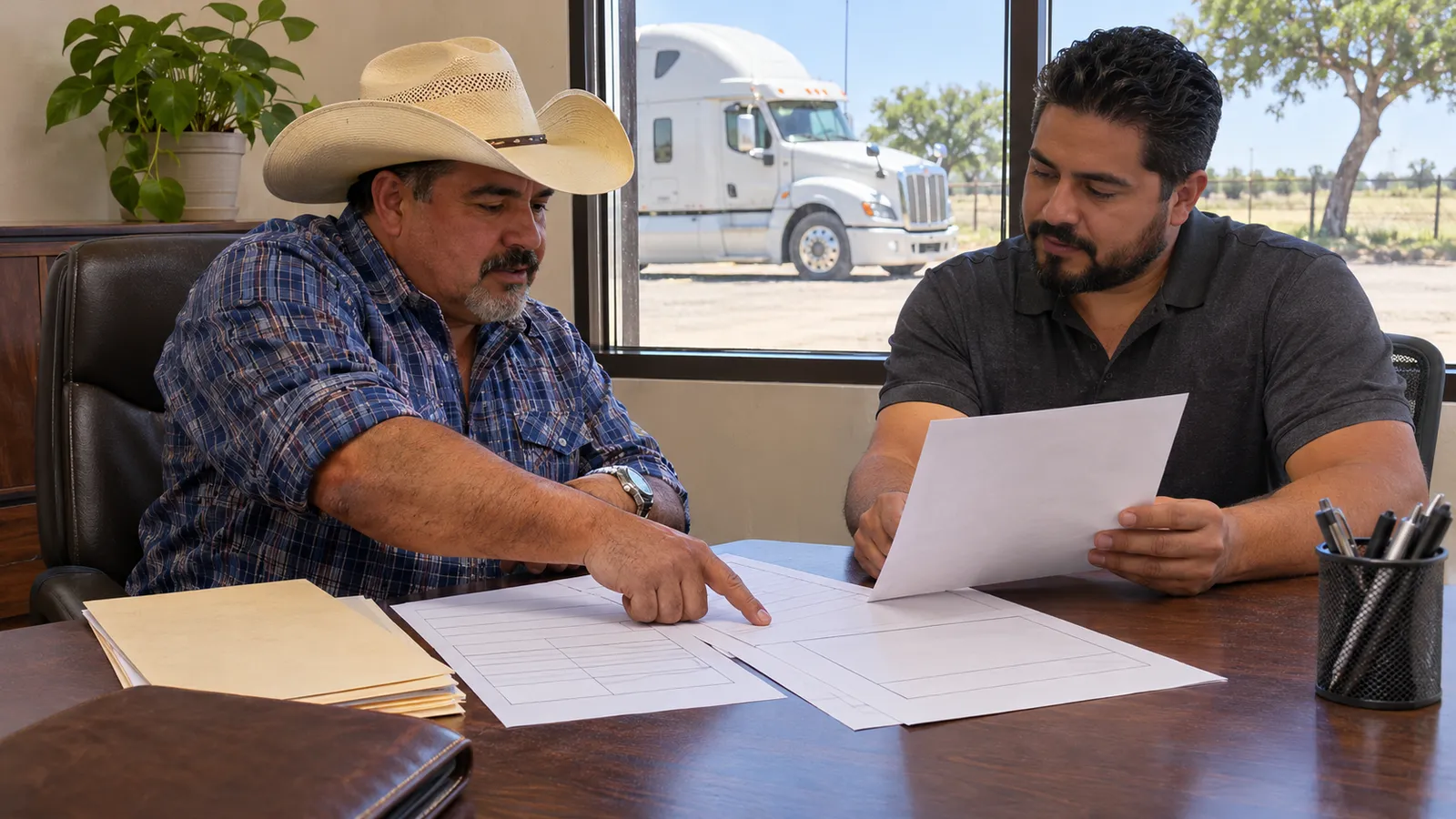
- Who handles it
- The Federal Motor Carrier Safety Administration, plus Texas agencies that register carriers
- What gets filed
- Updated registration records for the company, a new registration for a buyer who takes only trucks, and notice to insurers
- Timing
- Settle the plan before closing, and update records promptly afterward because deadlines in the guidance differ and agencies can revoke authority
Watch for: Treating a USDOT number as something to sell on its own. Federal guidance warns against buying or selling numbers outside a real company transaction.
This guide is general information and is not tax or legal advice. Confirm every step with your attorney, your CPA and the agencies involved.
Buying the company versus buying the trucks
If a buyer purchases the whole company, including its legal identity, the company's USDOT number and authority generally stay with it. The buyer updates the records to show the new owners.
If the buyer purchases only trucks, customer contracts or equipment, the authority does not move. The buyer generally applies for its own number and authority.
Do not sell a number by itself
Federal guidance warns against buying, selling or leasing a USDOT or MC number outside a legitimate company transaction. Agencies can start proceedings to revoke authority when a transfer is not recorded properly.
That risk falls on both sides, so have an attorney review how the deal is structured.
Records the company updates
A carrier keeps its registration current through a form called MCS 150. After a change in ownership, the company should update it. Sources disagree on the time limit, so ask the agency for the deadline that applies today.
Tell your insurer too, since insurance filings must match the entity that holds the authority.
Texas registration
Carriers that operate inside Texas can also have state level registration duties. Ask the Texas Department of Motor Vehicles which records apply to your fleet and to the buyer.
Safety record and equipment
Buyers look at the safety record, the age of the trucks and any liens on them. A clean record helps the price, and our guide on UCC lien searches shows how to find liens on equipment.
Questions to bring to your attorney
- Is the buyer buying the entity or only its assets?
- Who is responsible for past safety and insurance issues?
- Do any customer contracts require consent to move?
- How should drivers and leased operators be handled?
Drivers, leased operators and insurance
Drivers are employees or contractors of the company, so a buyer needs to decide who keeps working and on what terms. Owner operators leased onto your authority may need new agreements.
Insurance filings are tied to the entity, so the buyer needs its own coverage in place on closing day. Tell your agent early and expect the underwriter to ask about the safety record.
Practical steps for sellers
- Decide with your attorney whether the sale is of the company or of assets.
- List every truck, trailer and lien.
- Plan insurance changes with your agent before closing.
- Ask the agencies what they need to see after closing.
Read how buyers finance a purchase or request a price range.